HOF: Real Reason Belichick will be Inducted
Hall removes voting obstacle, but questions remain about purge of selectors
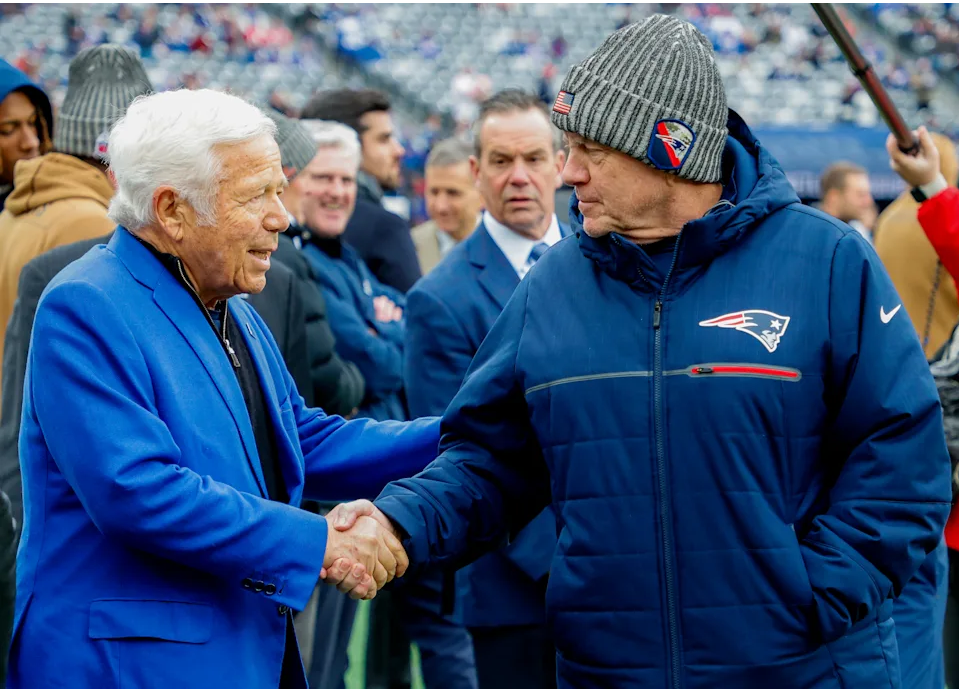
Bill Belichick is almost certain to enter the Pro Football Hall of Fame in 2027.
That is my prediction, and the reason is simple: The Hall finally eliminated the voting procedure that helped defeat him last year.
Belichick and New England Patriots owner Robert Kraft advanced Thursday as the Coach and Contributor finalists, respectively, for the Class of 2027. Both reached the same stage last year before falling short in the final election.
Their advancement is not the breakthrough. What matters is the different voting procedure awaiting them.
And the change came two years after multiple experienced selectors warned that the Hall’s new Group of Five arrangement was fundamentally flawed.
Introduced for the Class of 2025, that system combined three Senior players, one Coach and one Contributor into a single voting group. Each selector could support only three candidates, although every candidate needed 80 percent approval for election.
Five candidates. Three permissible votes. An 80-percent threshold.
Even selectors who believed all five deserved induction were prohibited from supporting all five. We framed it as a Gazinta Challenge.
The mathematical problem was obvious before the first ballot. We questioned the arrangement when the Hall introduced it in 2024. Other selectors raised concerns and urged changes.
The Hall proceeded anyway.
In 2025, Sterling Sharpe was the only Group of Five candidate elected. Mike Holmgren and three others fell short. In 2026, Roger Craig alone survived. Belichick, Kraft, Ken Anderson and L.C. Greenwood were rejected.
Two elections. Ten finalists. Two inductees. No Coaches. No Contributors.
Those results did not prove every rejected candidate deserved induction. They illustrated the consequences of a system that prevented selectors from expressing their full judgments.
Now the Hall has abandoned that arrangement.
Belichick and Kraft will join 13 Players in a common field of 15 finalists. The Selection Committee will reduce that field to 10, then seven, before voting for as many as six candidates. Election still requires 80 percent approval.
Belichick’s six Super Bowl championships and 333 career coaching victories make his qualifications difficult to dispute. Without the Group of Five restriction, I expect him to be elected.
Kraft also benefits from the revision, although his election remains less certain.
There is, however, one unresolved matter involving Hall president Jim Porter.
Following last year’s results, Porter suggested that the selectors themselves bore responsibility for questionable election outcomes. His subsequent reorganization removed or displaced many experienced voters, even though the Hall ultimately adopted the procedural correction selectors had advocated two years earlier.
Eliminating the Group of Five required changing the rules, not removing the people who voted under them.
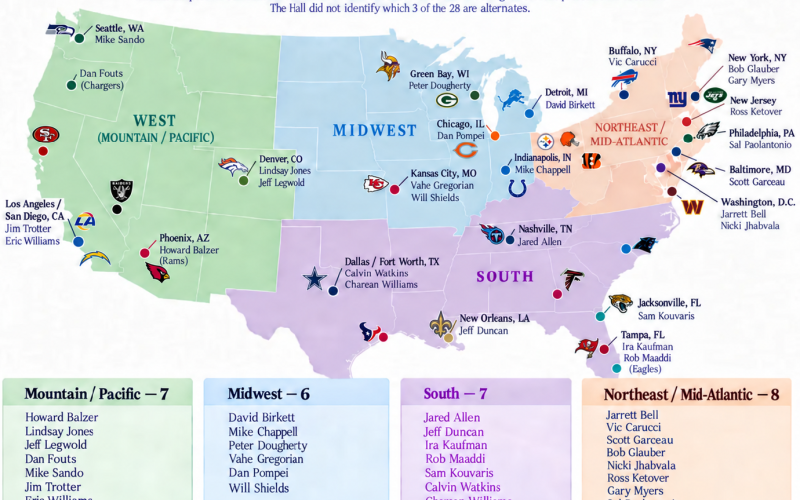
That distinction deserves an explanation. What evidence justified the extensive changes to the Selection Committee, and why were they necessary once the flawed voting procedure was abandoned? Twenty seven (27) veteran selectors departed or resigned, representing a combined 391 years of service on the Pro Football Hall of Fame Selection Committee. Why was that necessary?
The Hall has yet to provide a convincing answer.
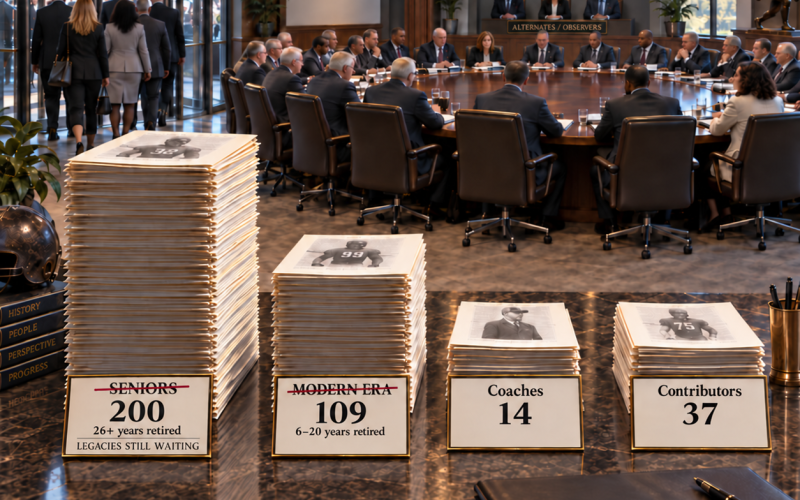
Meanwhile, another significant change warrants scrutiny. Players from every era now compete for the same 13 finalist positions. The separate Senior route is gone, raising new questions about the prospects of historically important candidates long overlooked by Canton.
The candidacy of football innovator Clark Shaughnessy illustrates why that question matters.
For now, Belichick and Kraft are back in contention, with their six shared championships providing a compelling case for recognition.
If Belichick enters Canton next summer, the lesson should be clear.
His qualifications did not change. The voting process did.